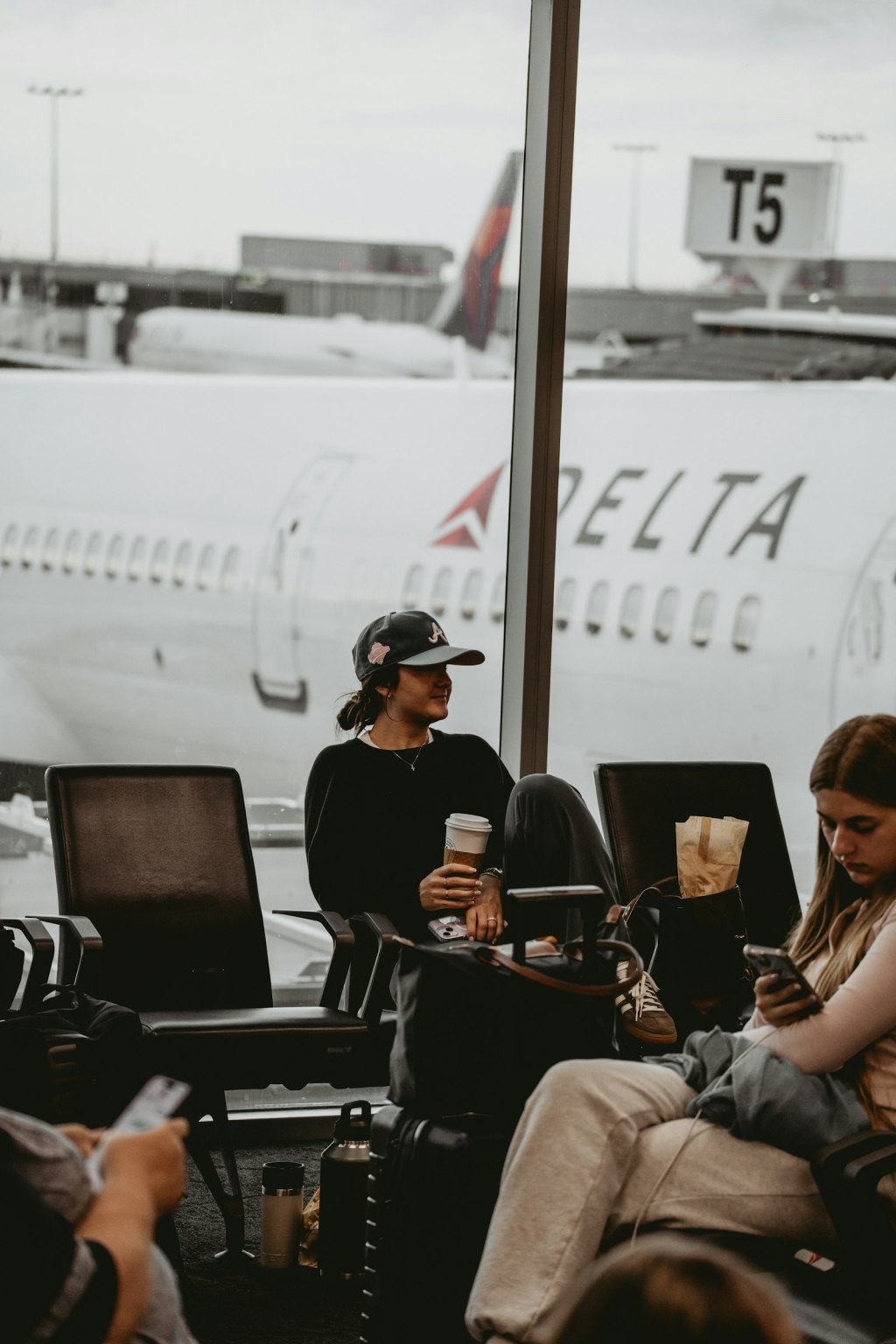
Every frequent traveler knows the routine. A 5 a.m. alarm, a giant coffee at the gate, a refill in the lounge, a glass of wine with the in-flight meal, maybe a nightcap at the hotel bar. Then you lie awake at 2 a.m. local time wondering why the trip that was supposed to recharge you has you running on fumes.
Caffeine and alcohol are the two drugs most of us use on the road without thinking twice. Neither is the enemy. But when you have them matters a lot more on travel days, because you are already short on sleep, crossing time zones and sitting in dry cabin air. Here is what the science and the experts say, and how we would put it to work on your next trip.
What the experts say about caffeine
On the Huberman Lab episode “Using Caffeine to Optimize Mental & Physical Performance”, Dr. Andrew Huberman explains that caffeine does not actually remove sleepiness. A molecule called adenosine builds up the longer you are awake, and caffeine works by blocking the receptors adenosine acts on. The adenosine is still there, which is one reason a big dose can be followed by a crash later in the day.
Two timing ideas from that episode are especially relevant for travelers:
- Wait a bit after waking. Huberman suggests delaying caffeine 90 to 120 minutes after you wake up on most days, and says people who find that hard can push their first cup back by about 15 minutes a day. His reasoning is that it may help you avoid an afternoon slump. Treat this as one expert’s suggestion rather than settled science; the CDC’s own jet lag guidance, for example, uses early-morning caffeine on eastbound trips.
- Stop well before bed. He says caffeine taken within roughly 8 to 12 hours of sleep can disrupt the quality and structure of your sleep, even if you still fall asleep fine.
The CDC’s Yellow Book chapter on jet lag disorder lands in a similar place on the evening side. Its sample day-by-day plan says to “Refrain from consuming caffeine after 1600 hours,” and it notes that stimulants in the hours before bed should be avoided so they do not interfere with nighttime sleep. It also points out that caffeine can be a useful tool for staying alert at the right times at your destination.
How much is reasonable? The FDA says 400 milligrams a day is an amount not generally associated with negative effects for most adults, roughly two to three 12-ounce cups of coffee. The agency also stresses that sensitivity varies widely and that some medications and conditions make people more sensitive. Those large lounge refills add up quickly.
What the experts say about alcohol
Alcohol is the trickier one, because it feels like a sleep aid. In the Huberman Lab episode “What Alcohol Does to Your Body, Brain & Health”, Huberman explains that alcohol disrupts the architecture of sleep, including deep and REM sleep, and describes sleep after drinking as “pseudo-sleep.” He also discusses alcohol as a diuretic that increases loss of water and sodium.
The CDC agrees on the travel angle. Its jet lag chapter says alcohol tends to help you fall asleep faster but makes sleep more fragmented, advises travelers to avoid excess alcohol during flights, and notes that alcohol and caffeine can both cause dehydration, which can make jet lag worse.
The travel playbook
Before the trip
- Count your real caffeine. Note how many cups, energy drinks and teas you actually have on a normal day, so you know your baseline before travel pushes it higher.
- Pick a daily cutoff time. Using the CDC plan as a guide, mid-afternoon at your destination is a sensible default. Set a phone reminder in the local time zone.
- Decide your drink plan in advance. It is far easier to say “one glass with dinner on night one” at home than at a free open bar in the lounge.
On travel day
- Match caffeine to the destination clock. Use it when you want to be awake where you are going, and skip it when you plan to sleep on the plane. On a red-eye, that usually means no coffee with the dinner service.
- Treat the lounge bar as optional. If you want to sleep on board, the CDC’s advice to avoid excess alcohol in flight is the one to remember. Sparkling water with lime still feels like a treat.
- Drink water alongside both. Huberman suggests about two glasses of water per alcoholic drink, and the CDC notes that staying hydrated matters for jet lag symptoms. Bring an empty bottle through security and fill it at the gate.
After you land
- Use morning light first, coffee second. The CDC recommends maximizing natural light at your destination. A walk outside, then your first coffee, is a good arrival-morning routine.
- Hold your cutoff even when you are dragging. A 5 p.m. espresso to survive dinner can cost you the first night’s sleep. A short nap earlier in the day is a better trade, and the CDC notes long naps can interfere with nighttime sleep.
- Keep nightcaps small and early. If you drink, have it with dinner rather than right before bed, and match it with water.
Our take
At Points Capital, our international team prioritizes the basics on the road: water, sunshine, fresh air, sleep, clean eating and staying active. Caffeine and alcohol fit into that picture when you use them on purpose. The simplest version is this: let daylight wake you up, use coffee for the hours you need to be sharp at your destination, stop by mid-afternoon, and do not count on a drink to put you to sleep. The specific 90-minute delay is worth experimenting with, but the evening cutoff and going easy on in-flight alcohol are where the expert advice and the CDC clearly line up.
Sources
- Huberman Lab: Using Caffeine to Optimize Mental & Physical Performance
- Huberman Lab: What Alcohol Does to Your Body, Brain & Health
- CDC Yellow Book: Jet Lag Disorder
- U.S. FDA: Spilling the Beans: How Much Caffeine Is Too Much?
This article is for general information only and is not medical advice. Talk to your doctor before changing your diet, exercise, sleep or supplement routine.