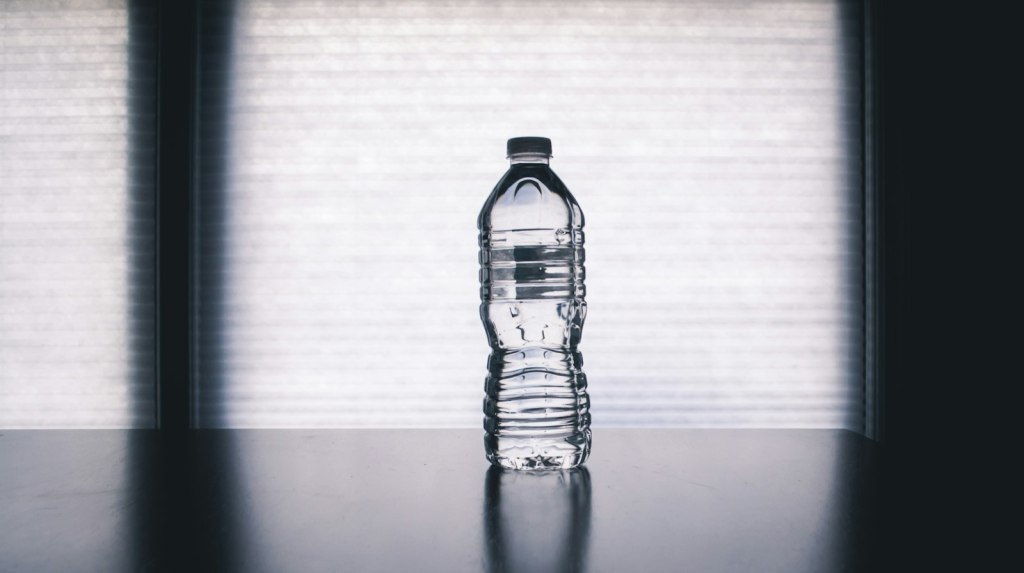
You wake up at 4:30 a.m. for the first flight out, grab a coffee at the gate, skip the water fountain because you don’t want to queue for the lavatory, and land five hours later with a dry throat, a headache and that foggy, wrung-out feeling. Sound familiar? On a travel day, water is often the first healthy habit to disappear, and the airplane cabin makes the problem worse.
According to the CDC’s Yellow Book, aircraft cabin air is “typically dry, usually 10–20% humidity,” which can dry out the mucous membranes in your nose, mouth and eyes. Add early wake-ups, extra caffeine, salty airport food and long stretches without a refill, and it’s easy to run behind on fluids without noticing.
So this week we turned to one of our favorite science sources for a simple, repeatable plan.
What Huberman Lab says about hydration
Stanford neuroscientist Dr. Andrew Huberman devoted a full Huberman Lab episode, “How to Optimize Your Water Quality & Intake for Health,” to water, and the team later summarized the key protocols in a Huberman Lab newsletter. A few ideas stand out for travelers.
1. Front-load your fluids
The newsletter’s baseline is about 8 ounces (237 mL) of fluid per hour for the first 10 hours of your day, roughly 80 ounces in total. It doesn’t need to be exact: you can drink more on waking and less later, as long as the total is spread over those first waking hours.
The reasoning is circadian. The newsletter explains that your internal clock helps regulate kidney function through the hormone vasopressin, and that the kidneys filter efficiently in the first part of the day before output drops off later. That’s also why it suggests cutting back on fluids in the evening, especially in the 2–3 hours before bed, if nighttime bathroom trips are disrupting your sleep.
2. Don’t wait for thirst
One line from the newsletter is worth remembering on any travel day: “not being thirsty does not mean you don’t need more fluid.” Thirst tends to lag behind your actual hydration status, which matters when you’re distracted by boarding groups, connections and customs lines.
3. Adjust for coffee, workouts and heat
The newsletter treats caffeine as a diuretic and suggests a 2:1 rule of thumb: for an 8-ounce coffee, drink about 16 ounces of water, ideally with some electrolytes or “simply a pinch of salt.” For exercise it cites the “Galpin Equation,” named for exercise scientist Dr. Andy Galpin: roughly your body weight in pounds divided by 30 equals the ounces of extra fluid to drink every 15–20 minutes while training. In heat or heavy sweating, it suggests increasing that by 50–100%, and for sauna sessions it suggests an extra 8–16 ounces for every 20–30 minutes.
These are averages and starting points, not precise prescriptions. Body size, climate, activity and health conditions all change what’s right for you, and people with heart or kidney conditions, or who are told to limit fluids or salt, should follow their own doctor’s advice.
The Points Capital travel-day hydration playbook
Before you fly
- Drink first, coffee second. Have a big glass of water as soon as you wake up, before the airport coffee. Early mornings are exactly when the front-loading approach fits best.
- Pack an empty bottle. TSA doesn’t allow full bottles through security, but an empty reusable bottle is fine. Fill it at a water station after the checkpoint so you board with a full one instead of relying on tiny cups from the cart.
- Pack electrolytes and a little fuel. We regularly travel with both Re-Lyte and LMNT electrolyte packets, which take up no room in a carry-on and turn a refilled bottle into the “water with electrolytes or a pinch of salt” the newsletter recommends after coffee or a workout. We also keep a sleeve of Clif Bloks in the bag for long travel days and hotel-gym sessions; the Salted Watermelon flavor is our favorite.
- Use the lounge. If your card or status gets you lounge access, treat it as a refill station: water, sparkling water, fruit and soups are easy wins before a long flight.
On the plane
- Think in hours, not glasses. Using the newsletter’s 8-ounces-per-hour baseline as a loose guide, a 4-hour daytime flight is roughly 32 ounces, or about one large bottle plus a cup or two from the cart.
- Pick an aisle seat on long hauls if you plan to drink steadily. Getting up for the lavatory is also a natural reason to stand and move.
- Match your coffee and cocktails. If you have coffee or wine on board, follow it with extra water. (We covered timing caffeine and alcohol in more depth in Coffee and Cocktails at 35,000 Feet.)
- Taper on red-eyes. If you’re trying to sleep overnight, drink well in the hours before boarding and sip, rather than gulp, once you’re in the air, so you’re not waking up every hour.
After you land
- Rehydrate on the new clock. Get most of your fluids in during the first part of your day at the destination and ease off in the evening, which supports better sleep in the hotel.
- Plan for the hotel gym and spa. Bring your bottle to workouts and the sauna and use the Galpin Equation and sauna guideline as a rough starting point, adding more in hot destinations.
- Remember the salt. If you’re sweating a lot, a little sodium with your water can help, but restaurant and room-service meals are already salty, so many travelers don’t need to add more. If you watch your blood pressure, see our earlier post, Salt on the Road.
Our take
Of all the habits our international team protects on the road (fresh air, sunshine, clean food, sleep and staying active), water is the cheapest and easiest. It doesn’t take a supplement or a special gadget, just a refillable bottle and a plan. What we like about the Huberman Lab approach is that it’s simple enough to use in a crowded terminal: drink early, drink before you’re thirsty, add more for coffee, workouts and heat, and taper off at night. Treat the numbers as a rough guide, listen to your body and land feeling more like yourself.
Sources
- Huberman Lab newsletter: Optimize Your Water Quality and Intake for Health
- Huberman Lab podcast episode: How to Optimize Your Water Quality & Intake for Health
- CDC Yellow Book: Air Travel
- Study cited in the newsletter on circadian regulation of the kidney: Nature Reviews Nephrology
This article is for general information only and is not medical advice. Talk to your doctor before changing your diet, exercise, sleep or supplement routine.


Leave a Reply