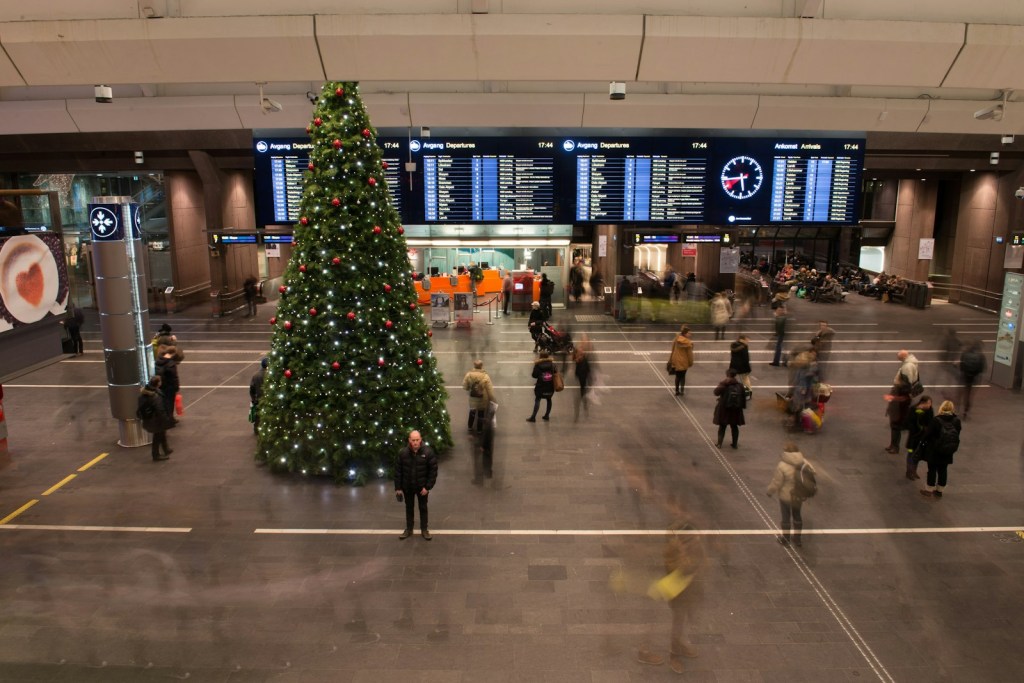
The holiday travel season asks a lot of your body. You wake up at 4 a.m. for the first flight out, sit through a delay, eat whatever the terminal sells, sleep in a guest room or hotel, then spend several days on rich food, late nights and a drink or two more than usual. For most of us that adds up to feeling a bit worn out by New Year’s. But cardiologists have long noticed something more serious: the Christmas holidays are linked with more heart attacks than usual.
With Thanksgiving next week and Christmas trips already booked, we took a look at what preventive cardiologist Dr. Joel Kahn of the Kahn Center for Cardiac Longevity says about the “holiday heart attack,” and turned it into a practical plan for frequent travelers.
What the cardiologist says
In a post on his clinic’s blog, “Why Are There So Many Heart Attacks on Christmas? Beware,” Dr. Kahn writes that Christmas has been linked with more heart attacks than any other day of the year, and walks through a Swedish study that tried to work out why.
As he describes it, researchers used Sweden’s national heart attack registry to find people who had a heart attack on Christmas Eve or Christmas Day in 2018 and 2019, then mailed them a survey. They compared the answers of 189 heart attack patients with 157 people who had stable heart disease but did not need care over Christmas. Everyone rated 27 possible triggers, such as eating, drinking, arguments and stress, as more or less common than usual in the days before.
The finding that stands out: the heart attack patients were more likely to report extra stress, worry and low mood. Both groups said they ate more food and sweets over the holidays, so overeating alone did not separate them. The study also did not find more arguments, money worries or skipped medications among the heart attack patients.
It is worth being clear about the limits. This was a small survey that asked people to remember how they felt after the fact, and it shows an association, not proof that stress causes holiday heart attacks. Still, Dr. Kahn’s practical advice is sensible for anyone, and it maps neatly onto the way people travel in December:
- Manage stress. He suggests planning the holidays thoughtfully, protecting sleep, avoiding conflict, keeping up exercise, and trying breathwork such as the 4-7-8 breathing pattern.
- Go easy on alcohol. He notes that drinking can blunt your sense of how cold you really are.
- Don’t overexert yourself in the cold. He points to heavy snow shoveling as a classic risk.
- Don’t ignore symptoms. In his words: “If you have any new symptoms of a heart condition, call 911 and get checked, even if it is Christmas.”
The holiday travel heart playbook
Before you go
- Build slack into the itinerary. Tight connections and same-day arrivals before a big family dinner are stress you choose. If you have the points, book the earlier flight or the extra hotel night so a delay is an inconvenience, not a crisis.
- Pack your medications in your carry-on. Keep a full supply plus a few extra days in the bag that stays with you, along with a written list of your medications and doses. Checked bags get lost; your blood pressure pills should not.
- Know where care is. Before you visit family in a new town, note the nearest emergency room. It takes a minute and you will probably never need it.
- Talk to your doctor first if you have heart disease, high blood pressure or other risk factors and a long or demanding trip ahead.
On travel days
- Use the wait time to breathe. Security lines and gate changes are ideal moments for a few rounds of slow breathing, like the 4-7-8 pattern Dr. Kahn mentions.
- Skip the “vacation started” airport bar round. An early drink sets the tone for a day of extra drinks, and it does nothing for your sleep that night.
- Keep moving. Walk the terminal instead of sitting at the gate. Dr. Kahn lists keeping up exercise as part of managing holiday stress.
While you’re there
- Protect your sleep. Guest rooms, kids up early and late-night catch-ups all chip away at it. A hotel night on points can be a cheap way to buy back rest and a bit of personal space.
- Be careful with cold-weather chores. If you fly from Florida to a snowy driveway in Minneapolis, don’t volunteer to shovel it all at once, especially after a big meal or a few drinks. Pace yourself or let the snowblower do it.
- Keep holiday drinking modest and remember that alcohol can make you feel warmer than you are when you step outside.
- Know the warning signs and act on them. The CDC lists the major heart attack symptoms as chest pain or discomfort; feeling weak, light-headed or faint; pain or discomfort in the jaw, neck or back; pain or discomfort in one or both arms or shoulders; and shortness of breath. The CDC adds that women are more likely to have other symptoms such as unusual tiredness and nausea or vomiting. If you notice these in yourself or someone else, the CDC says to call 911 immediately. Don’t wait until after dinner, until you get home, or until the holiday is over.
After the trip
- Reset your routine quickly. Get back to normal sleep, meals and exercise in the first few days home rather than letting the holiday pattern stretch into January.
- Follow up on anything odd. If you noticed new symptoms on the trip and brushed them off, book an appointment with your doctor.
Our take
The Points Capital international team prioritizes sleep, water, fresh air and staying active on the road, and the holidays are when those habits are easiest to drop. What we like about Dr. Kahn’s advice is that none of it requires a special diet or gear: less stress, less alcohol, no heroics in the cold, and no hesitating to call 911. For travelers, the biggest lever is the itinerary itself. Use your points and miles to buy margin, whether that is an earlier flight, a nonstop or a quiet hotel night, and you take a lot of the stress out of the season before it starts.
Sources
- Dr. Joel Kahn, Kahn Center for Cardiac Longevity: Why Are There So Many Heart Attacks on Christmas? Beware
- CDC: About Heart Attack Symptoms, Risk, and Recovery
This article is for general information only and is not medical advice. Talk to your doctor before changing your diet, exercise, sleep or supplement routine.



Leave a Reply