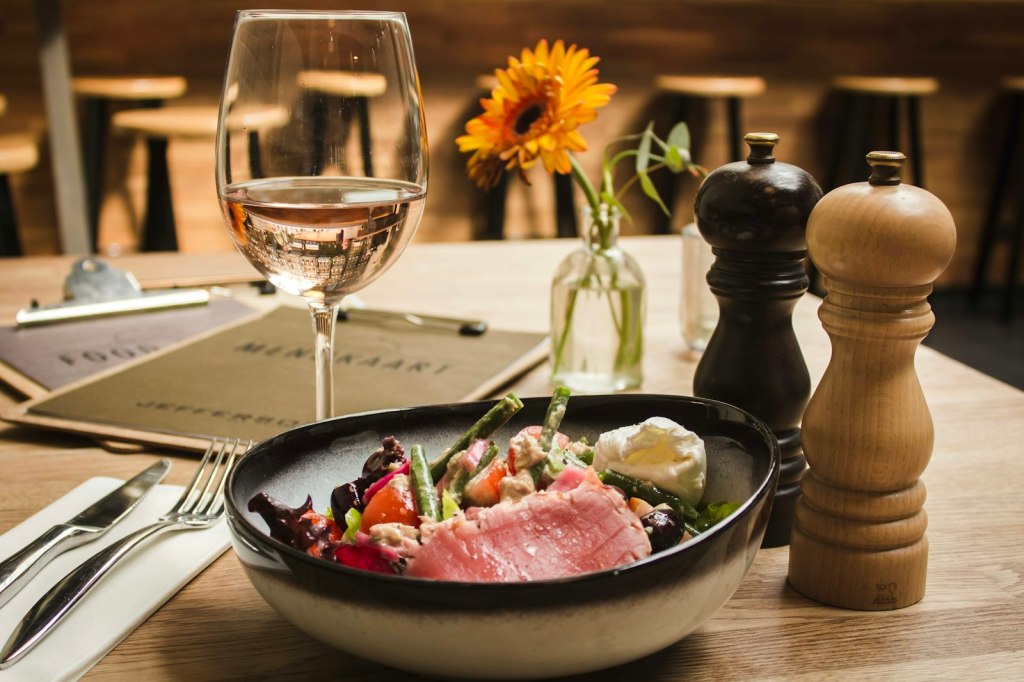
Here is a typical travel day: a breakfast sandwich at the airport, a bag of pretzels on the plane, a burger and fries at the hotel bar, maybe soup from room service at midnight because your body clock thinks it is dinnertime. None of it seems over the top. But almost every bite was made by someone else, and that is exactly where most of the salt in the American diet comes from.
At home you control the salt shaker. On the road you mostly don’t. For frequent travelers who eat out several days a week, that quietly turns into a lot of sodium, and sodium is closely tied to blood pressure. This week we looked at what preventive cardiologist Dr. Joel Kahn has written about salt, checked the numbers against the CDC and the World Health Organization, and built a practical plan for eating out on trips.
How much salt are we talking about?
The WHO recommends that adults eat less than 2,000 mg of sodium a day, which is less than 5 grams of salt, or just under a teaspoon. The US Dietary Guidelines, as summarized in a CDC fact sheet, set the limit at less than 2,300 mg a day. Either way, most of us blow past it: the same CDC sheet says US adults average more than 3,400 mg a day, and that more than 70% of the sodium Americans eat comes from processed food and restaurant meals, not the salt shaker.
That second number is the one travelers should notice. When you are on the road, nearly every meal is a restaurant meal or a packaged snack.
What a cardiologist says about salt
Dr. Joel Kahn is an integrative cardiologist who runs the Kahn Center for Cardiac Longevity in Michigan and hosts the Heart Doc VIP podcast. In a blog post titled “Salt Intake in the Diet and Hardening of the Arteries: Are They Related,” he discusses a Swedish study of more than 10,000 people published in European Heart Journal Open in 2023.
The study, led by Jonas Wuopio, estimated each person’s daily sodium intake from urine samples and then looked at their arteries with heart CT scans and neck ultrasounds. Higher estimated sodium was associated with more plaque in both the heart’s arteries and the carotid arteries. The link appeared to run mainly through blood pressure, and it showed up even in people whose blood pressure was in the normal range. One important caveat: this was a cross-sectional study, a snapshot in time, so it shows an association and cannot prove that salt caused the plaque.
Dr. Kahn’s suggestions in that post are simple: cut back on table salt, cook with spices instead, and consider a salt substitute that swaps part of the sodium chloride for potassium chloride. (Salt substitutes contain potassium, so ask your doctor before switching.)
In another post, “Plant-Based Diet for Hypertension: Should You Change Now for Success?,” Dr. Kahn reviews research on eating patterns such as DASH, Mediterranean and vegetarian diets, which were linked to lower blood pressure in the studies he discusses. He favors meals built on vegetables, fruits and whole grains, with less sodium, sugar, processed food and red meat. That is his view as a plant-forward cardiologist; you don’t need to change your whole diet to use the travel tips below. His bottom line is a useful one for anyone: “Diet is a modifiable factor that can be tailored to lower blood pressure.”
The low-salt travel playbook
Before you go
- Know your numbers. If you haven’t had your blood pressure checked recently, do it before a busy travel season, and ask your doctor whether you should watch sodium more closely.
- Look up the menu ahead of time. The CDC notes that many chain restaurants post nutrition information online. Checking the airport or hotel chain menu before you are hungry makes the better choice easier.
- Pack your own snacks. Fresh fruit, unsalted nuts and cut vegetables beat the salty pretzels and chips on the drink cart.
At the airport and on the plane
- Read the label on grab-and-go food. Check the milligrams of sodium per serving and the number of servings in the package, as the CDC suggests. A wrap labeled “2 servings” can double what you thought you were eating.
- Use the lounge buffet strategically. Fill up on fresh fruit and plain vegetables first, and go light on soups, cured meats, cheese and sauces.
- Drink water. Our team prioritizes water on travel days anyway, and it is an easy swap for salty snacks when you are just bored at the gate.
At restaurants and room service
- Ask for no added salt. The CDC suggests simply asking the kitchen to skip it. Most good restaurants will happily do so.
- Get sauces and dressings on the side. Use condiments sparingly, another CDC tip, since soy sauce, dressings and gravies can carry a lot of sodium.
- Build the plate around plants. In the spirit of Dr. Kahn’s advice, order a vegetable side or salad and lean on dishes flavored with herbs, spices, lemon or vinegar rather than salt.
- Book a room with a kitchen or fridge. When you are redeeming points, an award night at a suite or apartment-style hotel lets you make a simple breakfast from a local grocery store instead of eating out three times a day.
After the trip
- Reset with home cooking. A few days of meals you made yourself, built on fresh produce, puts you back in control of the salt shaker.
- Keep an eye on blood pressure if you travel a lot. If you are on the road most weeks, mention it to your doctor so they can factor it into your checkups.
Our take
At Points Capital, our international team prioritizes clean, organic eating, water and staying active on the road, and this is one area where travelers can make a real difference without giving anything up. You don’t have to skip the great meals that make a trip worthwhile. The win is in the forgettable food: the airport pretzels, the late-night room service, the third restaurant meal of the day. Ask for no added salt, get the sauce on the side, add a vegetable and pack a few snacks. The research on salt is still mostly observational, but the direction is consistent, and these habits are easy to keep on any trip.
Related on Points Capital: Healthy Travel Snacks: How to Pack Your Own Plane Food · Walk the Terminal, Take the Stairs: A Cardiologist’s Case for Moving More on Travel Days · Andrew Huberman’s “Protocols”: How to Stay Healthy While Traveling All Year
Sources
- Dr. Joel Kahn, Kahn Center for Cardiac Longevity: Salt Intake in the Diet and Hardening of the Arteries: Are They Related
- Dr. Joel Kahn, Kahn Center for Cardiac Longevity: Plant-Based Diet for Hypertension: Should You Change Now for Success?
- Wuopio J, et al. The association between sodium intake and coronary and carotid atherosclerosis in the general Swedish population. European Heart Journal Open, 2023.
- CDC: Get the Facts: Sodium and the Dietary Guidelines (PDF)
- World Health Organization: Sodium reduction fact sheet
This article is for general information only and is not medical advice. Talk to your doctor before changing your diet, exercise, sleep or supplement routine.






Leave a Reply