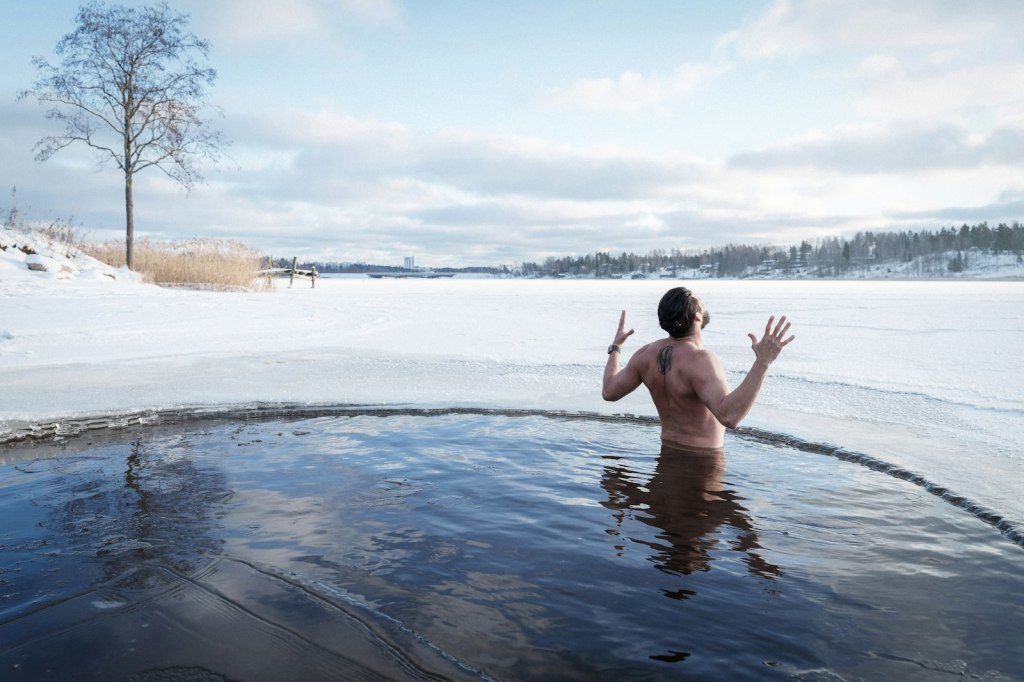
You land after a red-eye, the hotel room is too warm, your legs feel like concrete and you have a 9 a.m. meeting or a full day of sightseeing ahead. Some hotel spas and day spas offer a cold plunge pool next to the sauna, and almost every hotel room has a shower with a cold setting. So is a blast of cold water a smart travel-day reset, or just a trend?
We looked at what Stanford neuroscientist Dr. Andrew Huberman says about deliberate cold exposure in his Huberman Lab newsletter, reviewed a study that matches his weekly number, and turned it into a practical plan for frequent travelers. Bottom line: cold can be a useful alertness tool on the road, but the timing matters, and so does safety.
What Dr. Huberman says about cold exposure
In his newsletter “The Science & Use of Cold Exposure for Health & Performance”, a companion to his podcast episode on deliberate cold exposure, Dr. Huberman opens with a measured claim: “Done correctly, deliberate cold exposure can positively affect brain and body health.” The key ideas, in our words:
- A weekly total, not a daily ordeal. He suggests about 11 minutes of deliberate cold per week in total, split into roughly 2 to 4 sessions of 1 to 5 minutes each. That is very doable on a trip.
- No magic temperature. He says the right temperature varies by person. The target is water that feels really cold and makes you want to get out, but that you can safely stay in. The colder it is, the less time you need.
- Cold showers count. Most studies use cold-water immersion up to the neck, which he calls the best option, but he notes cold showers can work too and are far more accessible. For travelers, that means the hotel shower is a fallback when there is no plunge pool.
- Alertness, then warmth. He explains that cold triggers a release of adrenaline and noradrenaline, and that after you get out your body heats itself back up. Because rising body temperature tends to wake us up, he suggests using cold earlier in the day and not too close to bedtime. If it affects your sleep, move it earlier or skip it.
- Mind the gym timing. According to the newsletter, cold-water immersion (but not cold showers) in roughly the 4 hours after training may blunt some gains in muscle size, strength or endurance. His suggestion is to wait 6 to 8 or more hours after training, or do the cold before training, unless your only goal is recovery.
Where the 11-minute number comes from
The newsletter says the 11-minute figure is based on a recent study but does not name it. It lines up with a 2021 study in Cell Reports Medicine led by Danish researcher Susanna Søberg. It compared young, healthy men who regularly went winter swimming with matched men who did not. The swimmers reported about 11 minutes in cold water and about 57 minutes in sauna heat per week. Researchers found differences in how their bodies regulated temperature, including greater heat production when they were cooled.
Keep the evidence in perspective: the study was small (fewer than ten people per group), included only young men, and cannot show that winter swimming caused the differences. It is an interesting signal, not proof of a health benefit. Dr. Huberman also notes that the extra calories burned by cold exposure are not that significant, so this is not a weight-loss hack.
Safety first: cold shock is real
Dr. Huberman’s newsletter warns readers never to get into a dangerous body of water, never to hyperventilate before or during immersion, and to start with warmer water because cold shock is possible. The National Weather Service’s cold water safety page explains why: sudden immersion can trigger involuntary gasping and rapid breathing, and “Cold water can cause a sudden spike in heart rate and blood pressure.” It adds that this can be dangerous for vulnerable people. If you have a heart condition, high blood pressure or any other health concern, talk to your doctor before trying cold plunges.
The Points Capital travel cold-exposure playbook
Before the trip
- Check whether your hotel’s spa or fitness area has a cold plunge pool, and whether access is included or costs extra. Many spas list facilities on their website; if not, ask the front desk.
- If you are new to cold, practice at home first with the last 30 to 60 seconds of your shower turned cool, then colder. Do not make a hotel plunge pool your first-ever cold exposure.
- Plan your week loosely around Dr. Huberman’s 11-minute total: for example, two or three short sessions spread across a trip.
During the trip
- Use cold in the morning after arrival. A short cold shower or plunge early in the day can help you feel alert after an overnight flight. Pair it with outdoor daylight and a walk.
- Keep it out of your evening routine. If you are trying to fall asleep on a new time zone, a late plunge may work against you.
- Order your workout and cold sensibly. If you are lifting in the hotel gym to keep your progress, do the plunge before training or save it for a separate part of the day. A cold shower after a workout is a different story, per the newsletter.
- Breathe calmly and never plunge alone. Enter slowly, keep your head above water, breathe steadily and get out if you feel dizzy or unwell. Use pools with staff or other guests around.
- Skip it when you are run down. After a sleepless red-eye, too many holiday drinks or when you feel sick, rest and hydration come first.
After the trip
- Notice how cold affected your energy and sleep on the road, and keep only what helped.
- Back home, a cool finish to your daily shower keeps the habit alive between trips at no cost.
Our take
At Points Capital, our international team prioritizes health and fitness, sunshine, fresh air, water and sleep, and we see cold exposure as an optional tool in that kit, not a requirement. The appeal for travelers is that it is cheap, fast and portable: a cold shower works in any hotel room in the world. The science behind the bigger claims is still early, and much of the research involves small groups of healthy young people. Use it for the effect most people notice first, feeling more awake, keep it away from bedtime and your strength sessions, and treat safety as non-negotiable. If you already enjoy the sauna at hotel spas, a short, careful cold dip afterward is an easy way to try it.
Related on Points Capital: The Huberman Lab Minimum-Dose Strength Plan for Travelers · A Huberman-Style Hydration Plan for Frequent Flyers · How to Sleep Better in a Hotel Room
Sources:
- Huberman Lab newsletter: The Science & Use of Cold Exposure for Health & Performance
- Søberg S, et al. Altered brown fat thermoregulation and enhanced cold-induced thermogenesis in young, healthy, winter-swimming men. Cell Reports Medicine, 2021.
- National Weather Service: Cold Water Hazards and Safety
This article is for general information only and is not medical advice. Talk to your doctor before changing your diet, exercise, sleep or supplement routine.


Leave a Reply