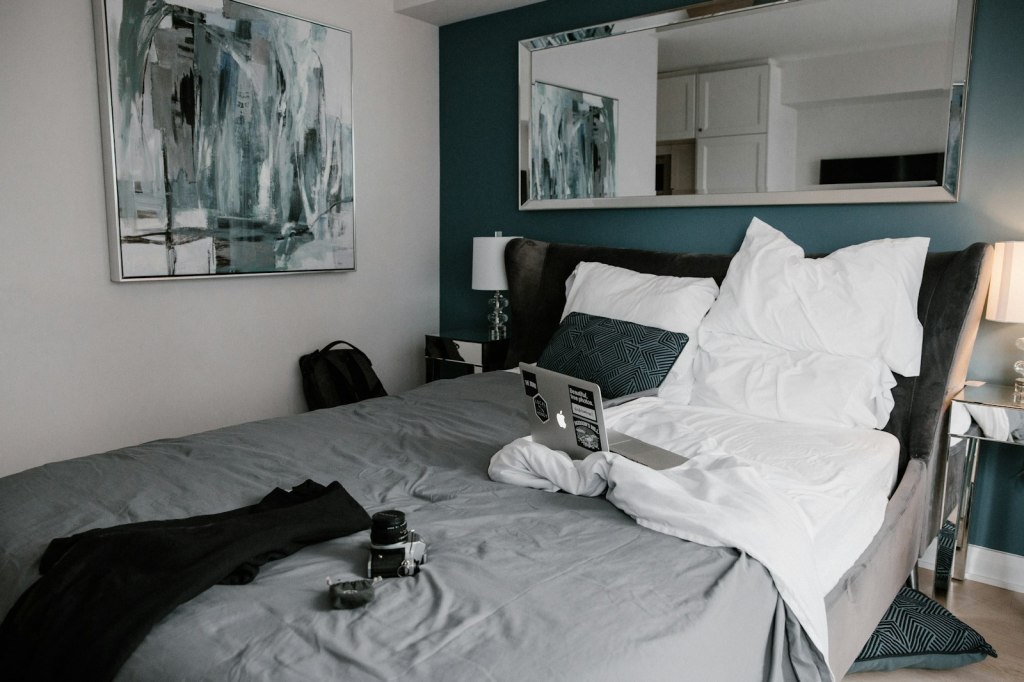
You finally get to the room at 10:30 p.m. after a late flight and a later dinner. The thermostat is set to 74, a sliver of parking-lot light cuts through the curtains, the TV standby light glows red, and you open the laptop in bed to answer “just a few” emails. Then you wonder why you’re staring at the ceiling at 1 a.m.
Hotel rooms are designed to look good, not necessarily to help you sleep. For frequent travelers, a run of short or broken nights adds up, and our Travel Health page already lists bad sleep near the top of what frequent travel does to your body. The good news: most of what ruins hotel sleep is fixable in about ten minutes, and the science behind the fixes is surprisingly simple.
What Dr. Rhonda Patrick says about sleep habits
In a FoundMyFitness episode segment titled “How Circadian Habits and CBT-I Support Better Sleep” (posted October 2024), Dr. Rhonda Patrick walks through the habits she considers the base of good sleep. As she puts it, “good sleep hygiene is really the foundation of good sleep.” Her main points, in our own words:
- Morning light sets the clock. She recommends at least 30 minutes of bright light early in the day to help reset your circadian rhythm so you feel sleepy at a normal time that night.
- Evening light pushes it the wrong way. She suggests cutting bright and blue light after sunset with dimmers, warm-colored bulbs, blue-light-filtering glasses, or simply dimming or skipping screens, and keeping the bedroom dark, since even a little ambient light can disrupt sleep.
- Don’t sleep hot. Core body temperature drops as part of the nightly cycle, so she advises against sleeping in a really hot room.
- Finish dinner early. Citing the work of Satchin Panda at the Salk Institute, she says people who stop eating at least three hours before bed tend to sleep better.
- Watch afternoon caffeine and keep moving. Caffeine can shift the body clock later, and regular exercise acts as a timing cue that helps keep sleep on schedule.
- “Bed is for sleeping only.” That line comes from cognitive behavioral therapy for insomnia (CBT-I), which she describes as a structured, evidence-based treatment for chronic insomnia. One piece of it is not using the bed for TV, phones or work.
The light point has solid research behind it. A 2011 study led by Joshua Gooley in the Journal of Clinical Endocrinology & Metabolism, which Dr. Patrick cites, compared 116 healthy young adults in ordinary room light (under 200 lux) versus dim light in the hours before bed. Room light delayed the onset of melatonin, the hormone that signals night to the body, in almost everyone and shortened its duration by about 90 minutes. Keep in mind the participants were 18 to 30 and studied in a lab, so it is a strong signal, not a precise forecast for your hotel stay.
The CDC’s sleep guidance lines up with much of this: adults 18 to 60 should get 7 or more hours, and the agency suggests a quiet, relaxing, cool bedroom, turning off electronic devices at least 30 minutes before bed, and avoiding large meals, alcohol, and afternoon or evening caffeine.
The hotel sleep playbook
Before you go
- Pack a small sleep kit. An eye mask, earplugs and a couple of binder clips (to pinch blackout curtains shut where they gap) take up almost no room.
- Request a quiet room. When you book with points or check in, ask for a room away from the elevator, ice machine and street side. Elite members often have a “room preference” field in the app; use it.
- Plan the dinner reservation. If you can, book dinner early enough to finish about three hours before you plan to sleep, in line with Dr. Patrick’s suggestion.
The first ten minutes in the room
- Turn the thermostat down. Set it cooler than the hotel default as soon as you walk in so the room is cool by bedtime. If the system won’t cooperate, call the front desk or ask for a fan.
- Kill the stray light. Close and clip the curtains, switch off the bright overhead lights in the evening, and cover small glowing lights on alarm clocks, TVs and chargers with a towel or the hotel notepad. Never cover a smoke detector or other safety equipment.
- Set up a “work zone” away from the bed. Answer email at the desk or in the lobby, not under the covers. Then put the phone across the room at least 30 minutes before lights out, per the CDC tip.
During the stay
- Get outside in the morning. Open the curtains wide when you wake up and try to get some daylight, like a walk to breakfast or coffee outside, rather than going straight from the room to a windowless conference hall.
- Use the hotel gym earlier in the day. Regular exercise helps anchor your sleep schedule, and a morning or afternoon session pairs nicely with that daylight.
- Keep coffee to the morning. The CDC suggests avoiding caffeine in the afternoon and evening. A study Dr. Patrick cites found that caffeine roughly equal to a double espresso three hours before bed delayed melatonin timing by about 40 minutes.
- Make room service a light, early order. If a late meeting runs long, a smaller meal is easier on sleep than a big plate at 11 p.m.
After the trip
- Get back to a regular schedule. The CDC recommends going to bed and getting up at the same time every day; returning to that rhythm quickly helps after a run of hotel nights.
- Talk to a doctor if poor sleep sticks around. If you struggle to sleep at home too, ask your doctor about it. CBT-I is a professional treatment for chronic insomnia, not a hotel hack.
Crossing several time zones adds a separate problem, jet lag, which calls for timing light around your destination clock. These tips are about getting the most out of any hotel night, whether you are two time zones from home or twenty minutes.
Our take
We spend a lot of time chasing suite upgrades and late checkouts, but the best room perk is a good night’s sleep. Sleep, sunshine and staying active are core to how the Points Capital international team travels, and this is one of the easiest wins: cooler thermostat, darker room, earlier dinner, work at the desk, daylight in the morning. None of it costs points, and none of it requires anything you can’t fit in a carry-on.
Related on Points Capital: Andrew Huberman’s “Protocols”: How to Stay Healthy While Traveling All Year · Coffee and Cocktails at 35,000 Feet: How to Time Caffeine and Alcohol When You Travel · Travel & Health: all articles
Sources
- Dr. Rhonda Patrick, FoundMyFitness: How Circadian Habits and CBT-I Support Better Sleep
- Gooley JJ, et al. Exposure to Room Light before Bedtime Suppresses Melatonin Onset and Shortens Melatonin Duration in Humans. Journal of Clinical Endocrinology & Metabolism, 2011.
- Centers for Disease Control and Prevention: About Sleep
This article is for general information only and is not medical advice. Talk to your doctor before changing your diet, exercise, sleep or supplement routine.



Leave a Reply