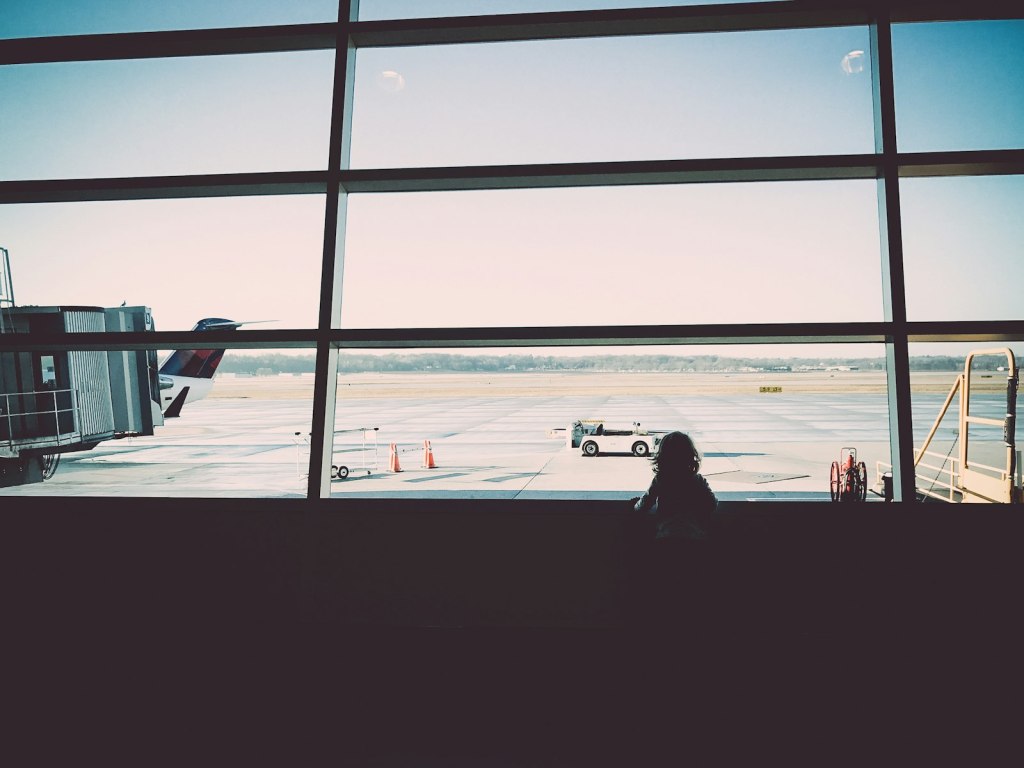
You know the feeling. The security line is not moving, your connection just got moved to a gate at the far end of the terminal, and the app says boarding closes in 14 minutes. Your shoulders are up near your ears, your heart is pounding and your thinking is getting narrow and jumpy. For frequent travelers, that is not a once-a-year event. It can happen several times on a single travel day.
A short spike of stress is normal and even useful. The problem is when travel stress stacks up, trip after trip, and never really switches off. That is why we like tools that work right now, in the middle of the terminal, with no app, no equipment and no lounge access required. The one we keep coming back to is a breathing pattern called the physiological sigh.
What the science says
In the Huberman Lab episode “Tools for Managing Stress & Anxiety” (March 2021), Stanford neuroscientist Dr. Andrew Huberman describes the physiological sigh as a fast, real-time way to bring your stress level down. The pattern is simple: two inhales back to back, then one long exhale. In his words, “when you’re feeling stressed, you can do a double inhale, long exhale.”
His explanation goes like this. The second, shorter inhale helps reinflate tiny air sacs in the lungs (alveoli) that can partly collapse. The long exhale then offloads carbon dioxide more efficiently, and making the exhale longer than the inhale tends to slow the heart, which helps you feel calmer. He credits the underlying breathing research to the labs of Jack Feldman at UCLA and Mark Krasnow at Stanford.
Huberman’s practical guidance in the episode: for real-time stress, one to three sighs is usually enough. Because your heart rate takes some time to settle (he mentions roughly 20 to 30 seconds), you may need to repeat it. He also cautions against trying to drop your heart rate too fast, since a very rapid slowdown can make some people feel faint.
There is now some published data behind this. A 2023 study in Cell Reports Medicine, “Brief structured respiration practices enhance mood and reduce physiological arousal” (Balban et al., with Huberman and Stanford psychiatrist David Spiegel as authors), had 108 participants practice for five minutes a day for about a month. They were assigned to cyclic sighing, box breathing, cyclic hyperventilation with breath holds, or mindfulness meditation. Every group reported less anxiety and negative mood. Cyclic sighing produced a bigger increase in positive mood and a bigger drop in breathing rate than mindfulness meditation.
The fine print matters. The authors call the study exploratory. Groups were small, the study was run remotely, participants were mostly Stanford students, and it lasted only four weeks. Resting heart rate, heart rate variability and sleep measures did not change significantly. So treat this as a promising, low-cost tool, not a cure for anything.
The Points Capital airport stress playbook
Before the trip
- Practice at home first. Try a few sighs on a calm day so the pattern is automatic when you need it. A deep breath through the nose, a second short top-up inhale, then a slow, full exhale through the mouth.
- Remove the stressors you can control. Check in online, know your terminal and connection time, and keep your boarding pass and ID in the same pocket every trip. Breathing helps with stress; it does not fix a 35-minute connection.
- Protect sleep the night before. Huberman notes in the same episode that when good sleep gets hard to come by, stress has likely shifted from short-term to chronic. A rested traveler handles a delay better.
At the airport and on board
- Security line: one to three physiological sighs while you wait. Nobody will notice.
- Bad news on the app: a delay, a cancellation or a downgrade. Sigh first, then call the airline or open the rebooking options. You will think more clearly once your heart rate settles.
- Widen your view. Huberman also describes stress narrowing your vision into a kind of tunnel vision, and deliberately relaxing your gaze to take in the whole scene as a way to calm the mind. A big terminal window looking out over the runway is a good place to try it.
- Takeoff jitters or turbulence: a few slow sighs with an extra-long exhale. Stay seated and buckled; this is a breathing tool, not a reason to get up.
- Skip the intense breathwork in the air. Huberman discusses rapid, hyperventilation-style breathing (Wim Hof style) as something that raises adrenaline, and he advises getting a doctor’s clearance first and never doing it near water. A cramped airplane seat is not the place for it.
After you land
- Use longer exhales to wind down. Huberman notes that exhale-emphasized breathing shows up in many sleep routines. A few minutes of slow sighs in the hotel room can help you shift out of travel mode.
- Handle the long-term load. For stress that lasts weeks, not minutes, the episode points to the basics: regular exercise, good sleep and time with people you care about. Those are habits for the whole year of travel, not just one trip.
Our take
The Points Capital team puts health and fitness first on the road: clean eating, sunshine, fresh air, water, sleep and staying active. Stress control fits right into that list, and the physiological sigh is about the easiest habit we can think of to add. It is free, takes under a minute, and works in a TSA line, a crowded gate area or a middle seat.
Just keep expectations realistic. The research is early and the study was small. If you deal with ongoing anxiety, panic or heart symptoms when you travel, talk to your doctor rather than relying on a breathing trick. For the everyday chaos of a busy travel day, though, two inhales and one long exhale are worth a try.
Sources
- Huberman Lab podcast, “Tools for Managing Stress & Anxiety” (March 8, 2021)
- Balban MY, et al. “Brief structured respiration practices enhance mood and reduce physiological arousal.” Cell Reports Medicine, 2023 (via PubMed Central)
This article is for general information only and is not medical advice. Talk to your doctor before changing your diet, exercise, sleep or supplement routine.





Leave a Reply